BY KILIAN RÜCKRIEGEL
Introduction
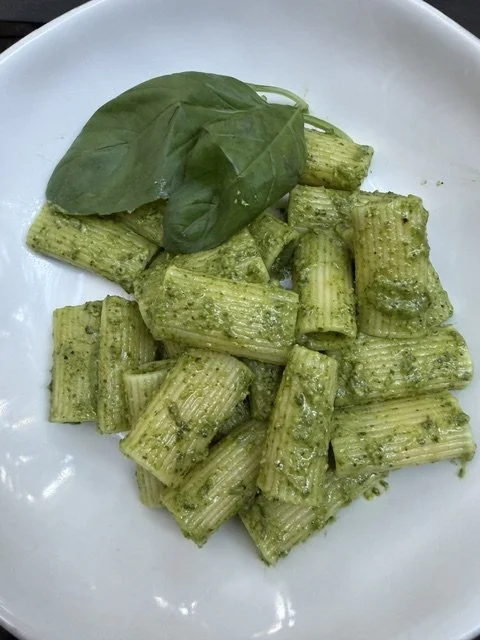
This recipe produces a vibrant, green pasta with a generous homemade pesto made of fresh basil and frozen spinach — a budget adaptation that stretches the more expensive fresh basil further with frozen spinach while adding nutrition, color and body to the sauce. The frozen spinach is thawed and squeezed dry before blending, becoming completely invisible in the finished pesto while adding iron, fiber and a deep green color.

Hi, I’m Kilian
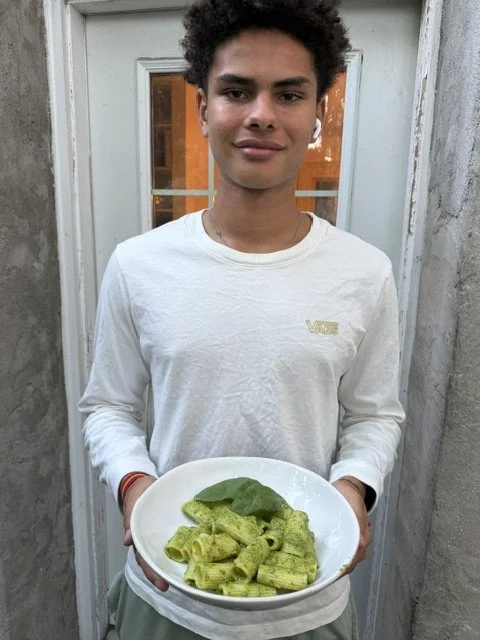
I am 17 and the recipe developer and cook behind this website. I have been cooking since I was young. My recipes are influenced by my family heritage (American and German), studying abroad in Spain, traveling to other countries, and my community in Crown Heights, Brooklyn. I have also done research, volunteered, and advocated to end food insecurity in New York City for years. This site was initially inspired to provide affordable and easy-to-make recipes for families who struggle to feed their families quality delicious meals.
Enjoy! Aprovecha!
Affordable Easy Vegetarian
PREP TIME: 10 mins
COOK TIME: 25 mins
COOLING TIME: 5 mins
METHOD
Thaw and squeeze the spinach: If using frozen spinach from a block, thaw completely — either overnight in the refrigerator or in a bowl of cold water for 30 minutes. Once fully thawed, place in a clean dish towel and twist and squeeze as hard as you can over the sink until no more water comes out. The squeezed spinach should be almost completely dry and compact. Any water left in the spinach will negatively impact the pesto texture.
Toast the nuts: Toast 0.3 cup pine nuts, pistachios, or walnuts which are significantly cheaper, in a dry pan over medium heat for 2–3 minutes, shaking frequently, until golden and fragrant. Watch carefully as they burn quickly. Remove immediately and let cool for 5 minutes before blending.
Make the pesto: Place 3 garlic cloves in a food processor or blender. Add the cooled toasted 0.3 cup pine nuts, pistachios, or walnuts and pulse several times until roughly chopped. Add 1.5 cups of fresh basil leaves (about 2 large bunches) and the squeezed-dry 0.5 cup of frozen spinach, thawed and squeezed completely dry. Pulse again until roughly combined. With the processor running, slowly pour in 0.5 cups cup extra-virgin olive oil in a thin steady stream. Add 0.5 cup Parmigiano Reggiano or Pecorino Romano, finely grated (plus more to serve), 1 tablespoon of fresh lemon juice (about half a lemon), 0.5 teaspoon of salt and 0.3 teaspoon of freshly cracked black pepper. Process until smooth but with some texture. The pesto should not be a completely uniform purée. Taste and adjust salt, lemon and cheese.
Cook the pasta and reserve the pasta water: Bring a large pot of well-salted water to a rolling boil. Cook 14 ounces oz pasta — linguine, spaghetti, or penne until al dente according to the packet instructions. Before draining, reserve at least half a cup of the starchy pasta water. Drain the pasta but do not rinse it — the surface starch helps the pesto cling to each pasta strand.
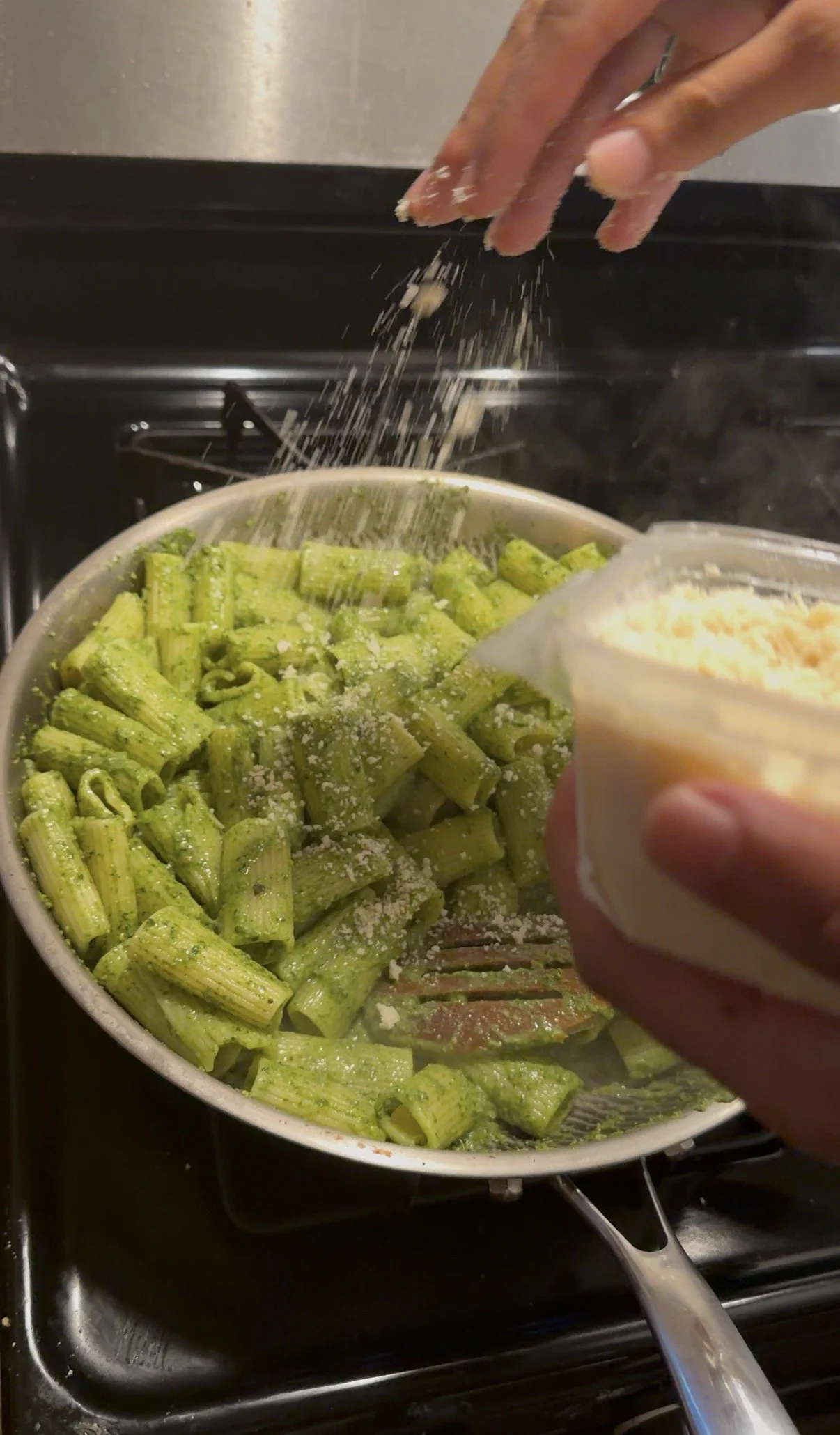
Combine pesto and pasta: Take the pan completely off the heat and let it cool for 1 minute. Stir 4-6 tablespoons of the reserved pasta water into the pesto — the warm pasta water loosens it into a silky, fluid sauce. Add the drained pasta to the pan. Pour the pesto over the pasta. Toss vigorously until each strand is evenly coated. If the sauce seems thick, add more pasta water a little at a time.
Plate and serve: Plate immediately into warmed bowls. Drizzle with 1 tablespoon of extra olive oil to finish and scatter with extra grated 0.5 cup Parmigiano Reggiano or Pecorino Romano, finely grated (plus more to serve). Add a crack of black pepper. Serve immediately — pesto pasta is at its best the moment it is made. Any leftover pesto can be frozen in ice cube trays and stored.
INGREDIENTS
Servings 4-6
14 ounces oz pasta — linguine, spaghetti or penne
1.5 cups of fresh basil leaves, packed (about 2 large bunches)
0.5 cup of frozen spinach, thawed and squeezed completely dry
0.5 cup of Parmigiano Reggiano or Pecorino Romano, finely grated (plus more to serve)
0.3 cup of pine nuts (or walnuts — significantly cheaper and excellent)
3 garlic cloves
0.5 cups cup of extra-virgin olive oil
1 tablespoon of fresh lemon juice (about half a lemon)
0.5 teaspoon of salt
0.3 teaspoons of freshly cracked black pepper
4 tablespoons of reserved pasta water
1 tablespoon of extra olive oil to finish (optional)
TIPS
Why frozen spinach in pesto? Fresh basil is expensive — a small bunch costs $2–$3 and wilts quickly. Frozen spinach costs a fraction of that, lasts indefinitely in the freezer, and when fully squeezed dry and blended with basil it becomes completely invisible in the finished pesto. The basil flavour remains dominant. The spinach adds body, colour, nutrition and stretches the pesto significantly further.
Squeezing the spinach is important because frozen spinach contains a significant amount of water. Squeeze it in a clean dish towel or press it firmly in your fist over the sink until no more water comes out.
Pine nuts, pistachios vs walnuts — traditional pesto uses pine nuts can be expensive ($8–$12 per bag). Walnuts produce an excellent pesto with a slightly earthier flavour and cost a fraction of the price. Almonds and cashews also work well. Toast whichever nut you use in a dry pan for 2–3 minutes before blending.
Never heat the pesto — always add pesto to pasta off the heat or at the very last moment, loosened with pasta water. Heat destroys the fresh basil flavour and turns it brown.
Freezing pesto — this recipe may make more pesto than you need for one meal of pasta. Pour the excess into an ice cube tray, freeze, then transfer to a zip-lock bag.
Copyright 2026, Kilian Ruckriegel
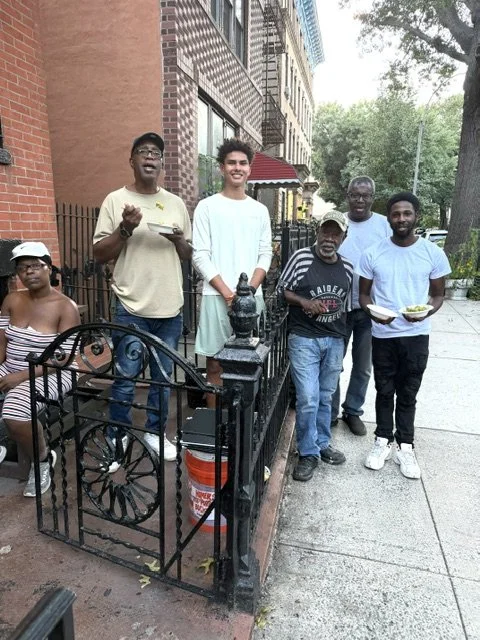
Getting feedback on the recipe from the neighbors.